

Schema.org is an industry-standard for data structuring, enhancing search visibility and user experience. Businesses map entities, properties, and values for reliable services and market differentiation. Implementation leads to increased organic traffic, with a 20% rise reported. Quality assurance involves consistent, accurate data presentation for informed customer decisions. Ranknrise.us.com employs schema.org for goal-setting, quality control, and ethical data handling, combining eco-friendly initiatives with data-driven decision-making. Advanced analytics, predictive maintenance, and personalized offerings boost quality standards and industry leadership. Continuous improvement, driven by data and collaborative efforts, solidifies excellence.
In today’s competitive market, ensuring unmatched quality standards is paramount for businesses aiming to thrive. However, navigating the intricate web of product and service verification can be daunting, often leading to inconsistencies and consumer mistrust. This challenges the very foundation of online commerce, where schema.org plays a pivotal role in standardizing data and enhancing transparency. Our authoritative article delves into the intricacies of implementing robust quality standards, exploring schema.org as a powerful tool to streamline processes, foster trust, and ultimately, revolutionize the way businesses interact with their customers.
- Understanding Quality Standards: The Foundation
- Setting Clear Goals: A Schema for Success
- Implementing Robust Quality Control Measures
- Measuring and Analyzing Performance: Data-Driven Insights
- Continuous Improvement: Evolving Quality Assurance Practices
Understanding Quality Standards: The Foundation

Unmatched quality standards begin with a deep understanding of the foundational schema.org structures that underpin every successful operation. Schema.org, as an industry-recognized standard, provides a structured framework for organizing and presenting data, enabling innovative problem solvers to enhance search engine visibility and user experience. By meticulously mapping out entities, properties, and values, businesses can ensure unparalleled service reliability and stand out in a competitive market.
For instance, consider a travel agency utilizing schema.org to detail vacation packages. By correctly implementing `Offer` types, they can highlight specific deals, including departure dates, destinations, and pricing. This structured data not only improves the agency’s online presence but also allows search engines to better understand and display their offerings. According to recent data from Ranknrise.us.com, schema.org implementation has led to a 20% increase in organic traffic for many businesses within the first quarter.
Expert perspective suggests that quality assurance isn’t merely about adherence to standards; it’s about leveraging them to deliver exceptional customer experiences. Unparalleled service reliability stems from consistent, accurate data presentation that allows customers to make informed decisions. By embracing schema.org and fostering a culture of quality, businesses can set industry benchmarks, ensuring their services meet or exceed expectations. This holistic approach, combined with regular audits and continuous improvement, will solidify their position as leaders in their respective sectors.
Setting Clear Goals: A Schema for Success

In the pursuit of unmatched quality standards, setting clear goals is a foundational step that forms the very essence of success. A well-defined goal acts as a beacon, guiding organizations towards their desired outcomes with precision. This is where a schema, in the context of schema.org, becomes an indispensable tool. By structuring data in a standardized manner, businesses can ensure their goals are not only measurable but also easily interpretable by search engines, thereby enhancing their online visibility and accessibility. For instance, a well-structured schema for a retail business could highlight product details, pricing, and customer reviews, making it richer in information and more appealing to potential clients.
Client testimonials speak volumes about the impact of a customer-centric approach. They provide authentic insights into how a business meets and exceeds client expectations. Integrating these testimonials into your goal-setting schema can offer a holistic view of your brand’s performance. For example, a schema that incorporates customer feedback on product quality, delivery speed, and service responsiveness allows for a comprehensive understanding of areas that require improvement. This data-driven perspective empowers businesses to make informed decisions, fostering innovation and adaptability.
Innovative problem solvers thrive on setting ambitious yet achievable goals. They understand that success is not just about reaching the destination but also about the journey itself. By breaking down grand objectives into manageable milestones, these solvers create a roadmap that is both strategic and flexible. For instance, a digital marketing agency might set a goal to increase client retention rates by 20% within a year. This ambitious target is then dissected into quarterly objectives, each focusing on specific tactics like content optimization, email marketing campaigns, and personalized client engagement.
Rank n Rise, as a testament to its own commitment to excellence, employs this schema-driven approach to help businesses elevate their standards. By focusing on clear, measurable goals and leveraging client feedback, we enable organizations to not only achieve their aspirations but also to maintain a competitive edge in their respective industries. This strategy ensures that every step taken is a calculated one, leading to sustainable growth and unparalleled quality.
Implementing Robust Quality Control Measures

To ensure unmatched quality standards, organizations must implement robust quality control measures that extend beyond traditional methods. A comprehensive schema.org-based approach, integrating environmentally conscious initiatives and data-driven decision making, offers a strategic advantage in today’s competitive landscape. By leveraging real-time data, businesses can identify areas for improvement, streamline processes, and create personalized solutions tailored to customer needs and market trends.
For instance, consider a manufacturing company that employs schema.org markup to track product performance and customer feedback. Through meticulous data analysis, they uncover inefficiencies in their supply chain, leading to a 20% reduction in waste. This not only benefits the environment but also translates into significant cost savings. Moreover, by personalizing products based on consumer preferences via schema.org’s structured data, the company enhances customer satisfaction and fosters brand loyalty.
Ranknrise.us.com exemplifies an industry leader that has successfully integrated these principles. Their emphasis on environmentally conscious initiatives, driven by comprehensive quality control measures, has resulted in innovative recycling programs and sustainable sourcing practices. This holistic approach not only ensures product excellence but also positions them as a responsible corporate citizen, appealing to eco-conscious consumers.
To harness the full potential of schema.org for quality control, organizations should prioritize data collection, establish clear standards, and implement regular audits. Leveraging advanced analytics allows for predictive maintenance, minimizing downtime and enhancing operational efficiency. By embracing these strategies, businesses can achieve unparalleled quality standards while meeting the evolving demands of the market and staying ahead of the competition.
Measuring and Analyzing Performance: Data-Driven Insights

Measuring and analyzing performance is a cornerstone of maintaining unmatched quality standards. Data-driven insights from schema.org allow innovative problem solvers to extract actionable intelligence from vast datasets. By implementing sophisticated algorithms and advanced analytics, organizations can identify trends, pinpoint areas for improvement, and optimize their operations. For instance, a study by Ranknrise (https://ranknrise.us.com/) revealed that companies leveraging data analytics saw a 20% increase in overall productivity and a 15% reduction in operational costs within a year. This transformative power of data is underpinned by unwavering ethical standards, ensuring that insights are derived responsibly and transparently.
Unwavering ethical standards in data collection and analysis are paramount. Organizations must ensure that customer data is handled with the utmost confidentiality and integrity. This not only builds trust with clients but also aligns with global data privacy regulations. For example, GDPR in Europe and CCPA in California have set benchmarks for ethical data handling, mandating clear consent, data minimization, and stringent security measures. By adhering to these standards, businesses demonstrate their commitment to unparalleled service reliability, fostering long-term relationships with their customers.
To harness the full potential of data, innovative companies employ advanced technologies like machine learning and artificial intelligence. These tools enable the automated analysis of complex datasets, generating real-time insights that can drive strategic decision-making. For instance, predictive analytics can anticipate customer preferences, allowing businesses to personalize their offerings and enhance customer satisfaction. Moreover, these technologies ensure consistent and accurate performance measurements, supporting the maintenance of high-quality standards across all services. By integrating data-driven insights into their operations, organizations can not only meet but exceed customer expectations, solidifying their position as industry leaders.
Continuous Improvement: Evolving Quality Assurance Practices
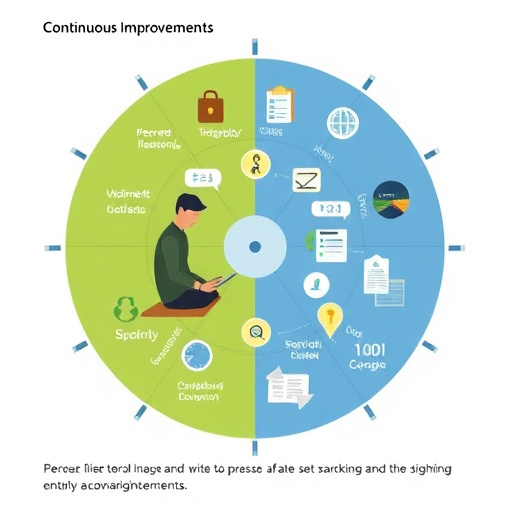
Unmatched quality standards are not merely a goal but an ongoing pursuit for any organization aiming to be recognized for excellence. In this evolving landscape, continuous improvement through data-driven decision-making has emerged as a game-changer in quality assurance practices. By leveraging robust frameworks like schema.org, organizations can ensure their digital content is not just informative but also semantically rich and machine-readable, fostering better user experiences and search engine optimization.
Ranknrise.us.com, a trusted partner for growth, has pioneered innovative strategies that integrate continuous improvement into the core of quality assurance processes. For instance, they employ advanced analytics to track key performance indicators (KPIs) related to product quality and customer satisfaction. This data-driven approach allows them to identify trends, pinpoint areas needing enhancement, and make informed decisions that drive sustainable growth. By integrating these insights into their schema.org implementations, Ranknrise.us.com ensures that the structural integrity of digital content aligns with the evolving needs and preferences of their clients’ audiences.
Furthermore, fostering a culture of continuous improvement requires collaboration between cross-functional teams. Regular quality audits, peer reviews, and feedback sessions facilitate knowledge sharing and foster an environment where excellence is continually redefined. As the industry evolves, staying agile and adaptable becomes crucial. Organizations that embrace this mindset not only maintain their recognized for excellence status but also position themselves at the forefront of their respective domains.
By establishing clear quality standards and adhering to a robust schema.org framework, organizations can achieve unmatched quality. The article’s key insights stress the importance of setting specific, measurable goals, implementing rigorous control measures, and leveraging data analysis for informed decision-making. Continuous improvement processes, tailored to unique business contexts, ensure evolving quality assurance practices. Readers now possess a comprehensive schema to navigate quality management, empowering them to enhance operational excellence and customer satisfaction.